Showing posts with label Slideshow. Show all posts

Wednesday, June 5, 2019

Now Lets Make ChicaGLOW


I'm ending my junior year, which means I'm ending Urban Planning with our last unit: "Flow". In this class, we discussed the designs of neighborhoods locally as well as globally. I saw some neighborhood designs from all over the spectrum, like cities from hundreds of years ago, in different countries and even locally. My favorite cities that we researched was Curitiba and the Pullman district, they’re both different designs and turned out different but I enjoyed learning about those different communities, it was inspiring and eye opening to learn how urban planning really affects citizens in different ways. While researching during our internal investigation, we viewed and listened to James Kunstler’s, Majora Carter’s, and Ellen Dunham-Jones' Ted Talks. They all presented 3 different subjects on communities and cities. These subjects talked about the architecture of cities and how it’s gotten lazy, the inequality of communities, and how we can fix these issues with concepts such as retrofitting. There were also other terms my classmates and I dissected like white flight, R.C.I. (Residential Commercial Industrial) communities, and N.I.M.B.Y. (Not In My Back Yard). For our External Investigation, we visited the pedway system downtown that connects all of the train lines, including the Metra.

MW, The Rede, 2019

I used all of this new information to redesign my very own neighborhood! I planned out a design at an intersection that has a lot of empty and unused spaces.


 I didn’t want to do my neighborhood because there’s nothing really here except houses and a few stores here and there. I then told myself how this was a good opportunity to apply my urban planning skills and make this intersection with nothing to do around it into the center pf this neighborhood. To find out what I wanted to do, I had to reflect on why do I have to leave my neighborhood to do things? After answering that, I thought about how there are kids my age in my neighborhood and there are even younger kids and how we should have more community centers so there can be more interaction throughout my block. For the new design, I used Minecraft to best represent what I wanted. This design relates to 2 different SDG's

SDG 11.7- by 2030, provide universal access to safe, inclusive and accessible, green and public spaces, particularly for women and children, older persons and persons with disabilities. All of the spaces that I added were public and while designing them, I thought of how everyone could be involved no matter your age, race and capabilities. 
SDG 11.6- by 2030, reduce the adverse per capita environmental impact of cities, including by paying special attention to air quality, municipal and other waste management. I added recycling and garbage on the streets. If you look at my design, the blue boxes represent public waste management because I know Chicago isn't the best at waste management.
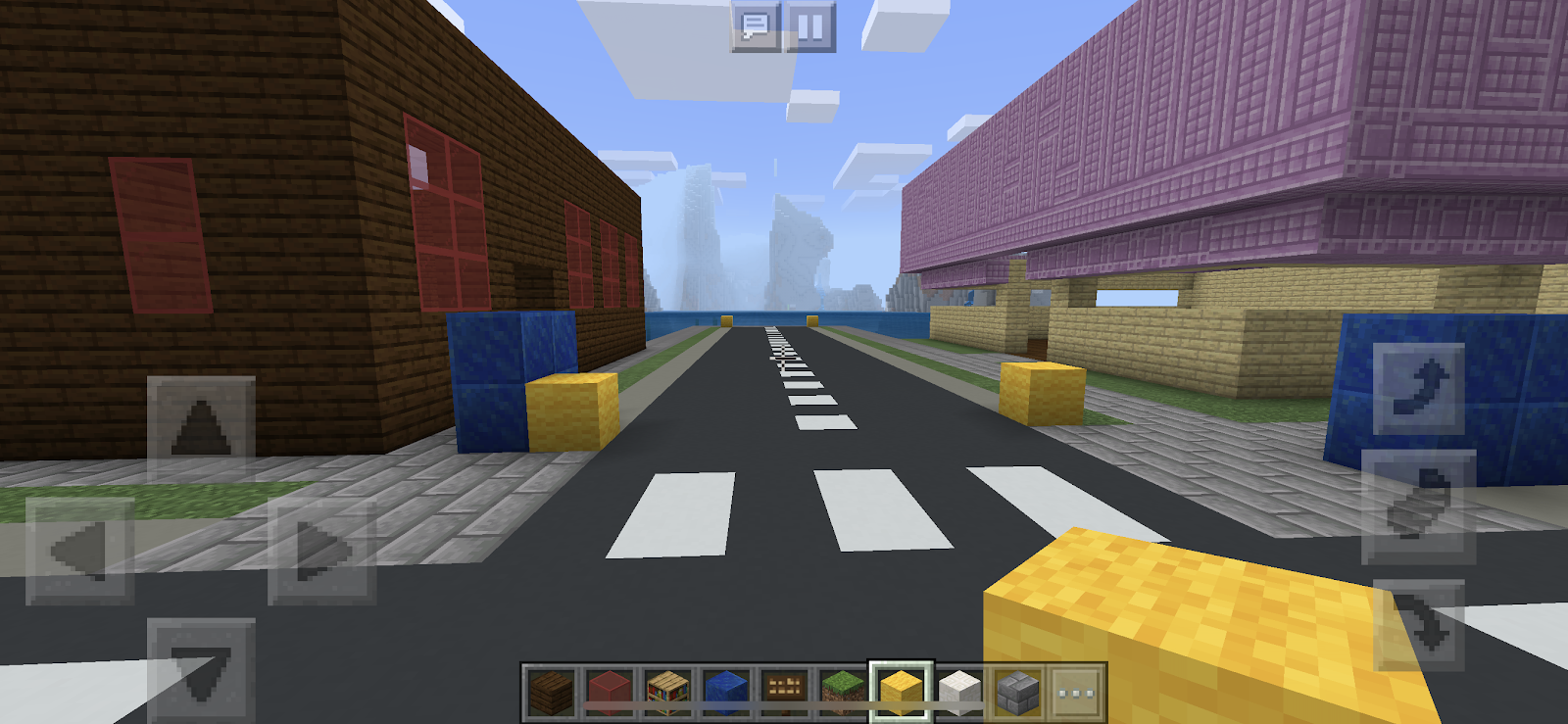

MW, Bike Lanes, 2019

Peter Calthorpe has 7 different principles to build a better city. While designing this, I thought about those. One of them is to raise the bike rate, I believe that with bike lanes, people wouldn't be as hesitant to bike, Another one is walk, with these spaces so close to a residential area, it would be so easy to walk and go to the library or go to the park instead of having to drive. He also talks about spreading out the density of cities and bringing more community spaces to neighborhoods like mine is a step in the direction of spreading density around in a city instead of having everything downtown or having to travel. 

Overall, this was a challenging action project and it was completely worth it, I enjoyed doing everything. I'm glad that I got to use Minecraft as well because I personally enjoy playing Minecraft so it was cool to have a crossover with what I'm doing in school. This course, Urban Planning was a great class to take and I plan on sharing what I learned with my peers outside of school because it's all useful information. 

Sources:

“Chicago Cultural Center | Choose Chicago.” English, www.choosechicago.com/things-to-do/museums-and-arts/chicago-cultural-center/.

“Sustainable Development Goal 11.” Sustainable Development.org. United Nations. Web. 3, Jun 2019. 

TED. “7 principles for building better cities | Peter Calthorpe.” Youtube.com. Lesson by Peter Calthorpe. August 31, 2017. Web. 


Wednesday, May 15, 2019

Circuits behind the city

Power is our second unit for my class, Urban Planning. In this unit we learned about circuits and that related to unit 1, when we learned about electricity. We went to an FE to the Museum of Science and Industry and there we saw the Tesla coil, which is a transforming alternating current, invented by Nikola Tesla. That was a very cool experience and it was relevant because at the time, we were learning about the war on currents. A war between Alternating and Direct current. Another reason this FE was relevant is because we're reading Devil in the white city, a book about Chicago's world fair, and the Museum is one of the only remaining structures from that time. In addition to learning about Alternating and Direct currents, I learned how to use formula's to calculate power, voltage, current, resistance, and ohms.

DS MW, Diagram, 2019
For this units Action Project, I partnered with my classmate,DS and we made a circuit of our own. I believe the purpose of this project was to use all that we learned and actually get to make something of it. I enjoyed designing a parallel circuit with my partner, and I also enjoyed seeing what my classmates did for their circuit. My favorite part was calculating all of the math that we learned. My partner and I even found a connection with SDG 7 and you can see that below. 


In conclusion, this project went very well and I think it tied in perfectly to our curriculum. I was pleased with all of my calculations and how I could find real world connections. 

Thursday, April 25, 2019

Build that Bridge


For my first Action project in my class Urban planning, we were able to build a bridge using only 65 popsicle sticks and Elmer's glue. The goal was for it to hold 10 lbs without breaking. This ties in with what we're learning because in the first unit, we learned about the purpose of bridges and how they have to do with urban planning. My classmates and I took a field experience on a city walk downtown with the Metropolitan Planning Council. We saw different buildings and bridges and how that affects the citizens of Chicago. On that tour, we saw draw bridges, they let up in the middle so that boats can come through. This experience also related to SDG goal 11 ( Make cities and human settlements inclusive, safe, resilient and sustainable ) because we learned more about how structure and architecture has to do with accessibility. For this Project, our bridge had to be a truss bridge. A truss bridge is a type of bridge that has a structure composed of triangles. 

Image result for pratt truss bridge
“Single Track 150' Pratt Truss Bridge Kit N Central Valley Model Works.” MegaHobby.com, www.megahobby.com/products/single-track-150-pratt-truss-bridge-kit-n-central-valley-model-works.html.


I worked with my classmates CM and OL, and we decided to build a truss bridge inspired by the Pratt bridge. During that process, we observed the law of conservation of energy, we didn't create nor destroy energy because everything we designed transferred into something even when it eventually broke. If you look through the slideshow, you can see our work in depth. 


Friday, March 22, 2019

People's assembly, Policing a Nation


This post is dedicated to my final Action Project for my Winter term Humanities course called A Nations Argument. The third unit focused on the 1960’s and we focused on civil rights and the bill of rights. I learned about Dialectics and how they connect to argument. In one of my last classes for this course, my classmates and I attended an online Yale lecture. We also attended two other lectures in the previous units. In this specific lecture, the lectern was Professor Jonathan Holloway. He discussed the civil rights era and events within 1964-1966. I think this is my favorite lecture so far.


KS, DS, Policing Assembly, 2019

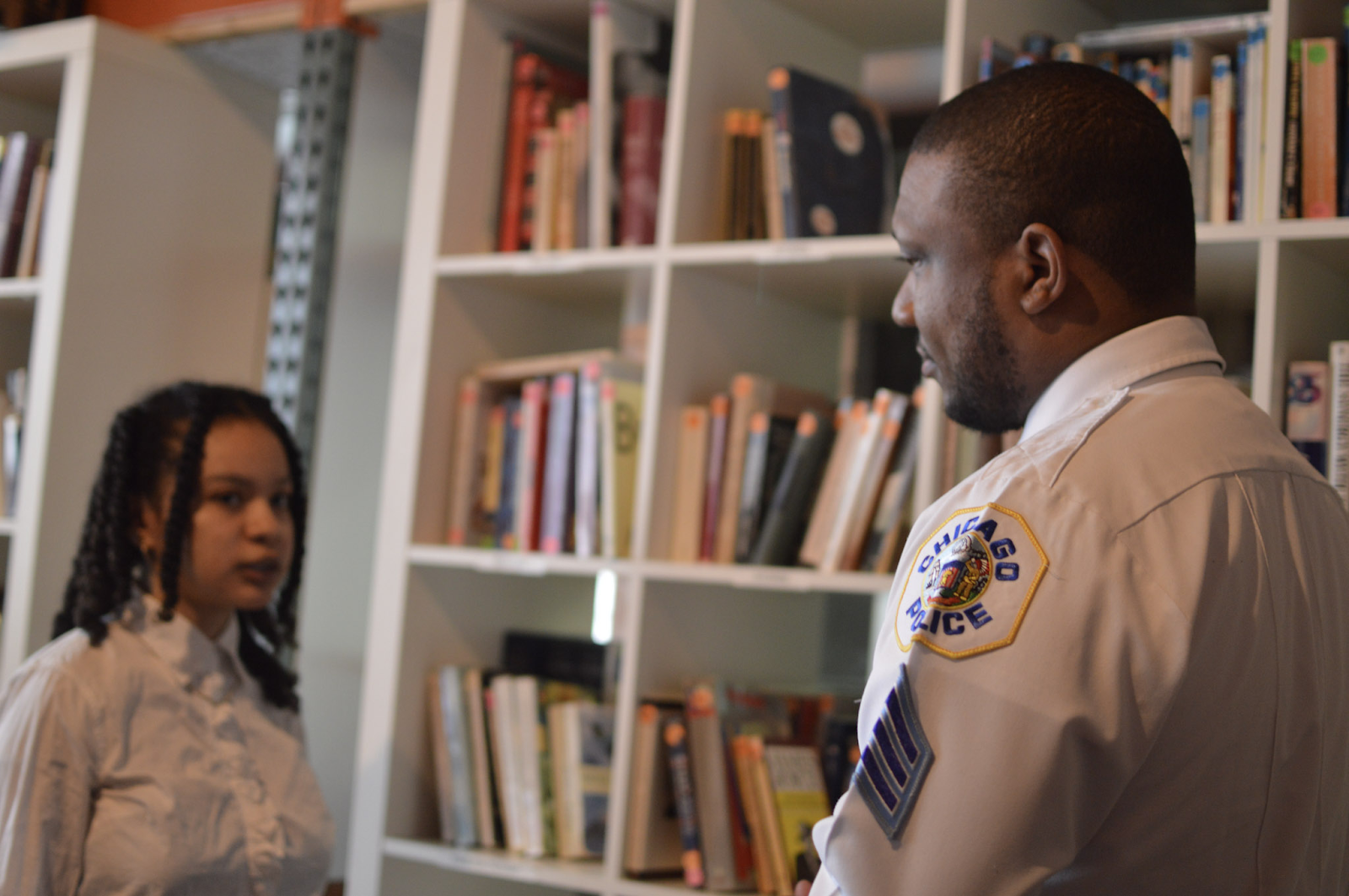
We started the unit off with our Action project. My classmates and I hosted a people’s assembly with the help of a Regina Holloway, a senior program manager for the NYU School of Law Policing Project. To prepare, my class divided into 3 teams, people research, topic research, and agenda managers. I was apart of the people research team. We invited Regina, 2 other community activist and a Police Sergeant, who’s taking apart of the Policing Projects pilot. We used this as an opportunity to discuss what we researched and ultimately get different perspectives in our community of Chicago.

There was really helpful conversation. I wish that we had more time and my classmates and I got to share more of our opinions and experiences but it was very informative. We started off with the conversation of policing in schools and here’s where you’ll see how I put my skills of dialectics to the test and break down one of the arguments used in our discussion.


Friday, October 19, 2018

2019 Mayoral Candidate Magazine

Image result for amara enyia mayor 2019
For my Fall Humanities class, we studied rhetorical appeals such as ethos, logos, and pathos. Another thing that we focused on was the status quo and how people challenge it. The mayoral Candidate that I have to study is Amara Enyia and she is well over qualified to be Chicago's mayor for 2019. During this unit we visited the Chicago History Museum to view the Dr. MLK Jr exhibit to get ready for our action project (AP). The AP that was assigned this unit was to make a sort of exhibit for our candidates. My classmates and I were encouraged to use the medium of our choice and I decided to create a magazine based on Amara's Candidacy.

In my Magazine you will see an exert from an article about the Jason Van Dyke trial. Amara starts off her thoughts with a declarative statement. By doing so, she mentions how Chicago needs a public safety plan, which is one of her top priorities. Amara uses an imperative sentence when she said "Moreover, we must evaluate how our city budget prioritizes police infrastructure over the necessary investments in an inclusive economy, affordable housing, mental health services, and other components of thriving communities.", its an imperative sentence because she commands us to evaluate. In Amara's text on why she's running, she uses exemplification by explaining why Chicago metaphorically lives in two cities, which I found very interesting
Below, I've made a slideshow to show my magazine.


The inclination & Human impact of Biodiversity

This is my final AP of my senior year. For my class frontiers, I wrote a research paper on one of the Grand Challenges. I chose challenge ...